

Psychedelics’ media coverage would have you believe that they’re a “new” cure for depression, anxiety and trauma. And while their potential is huge, implementing them in an over-medicalised, individualist approach may lead us down a dangerous path.
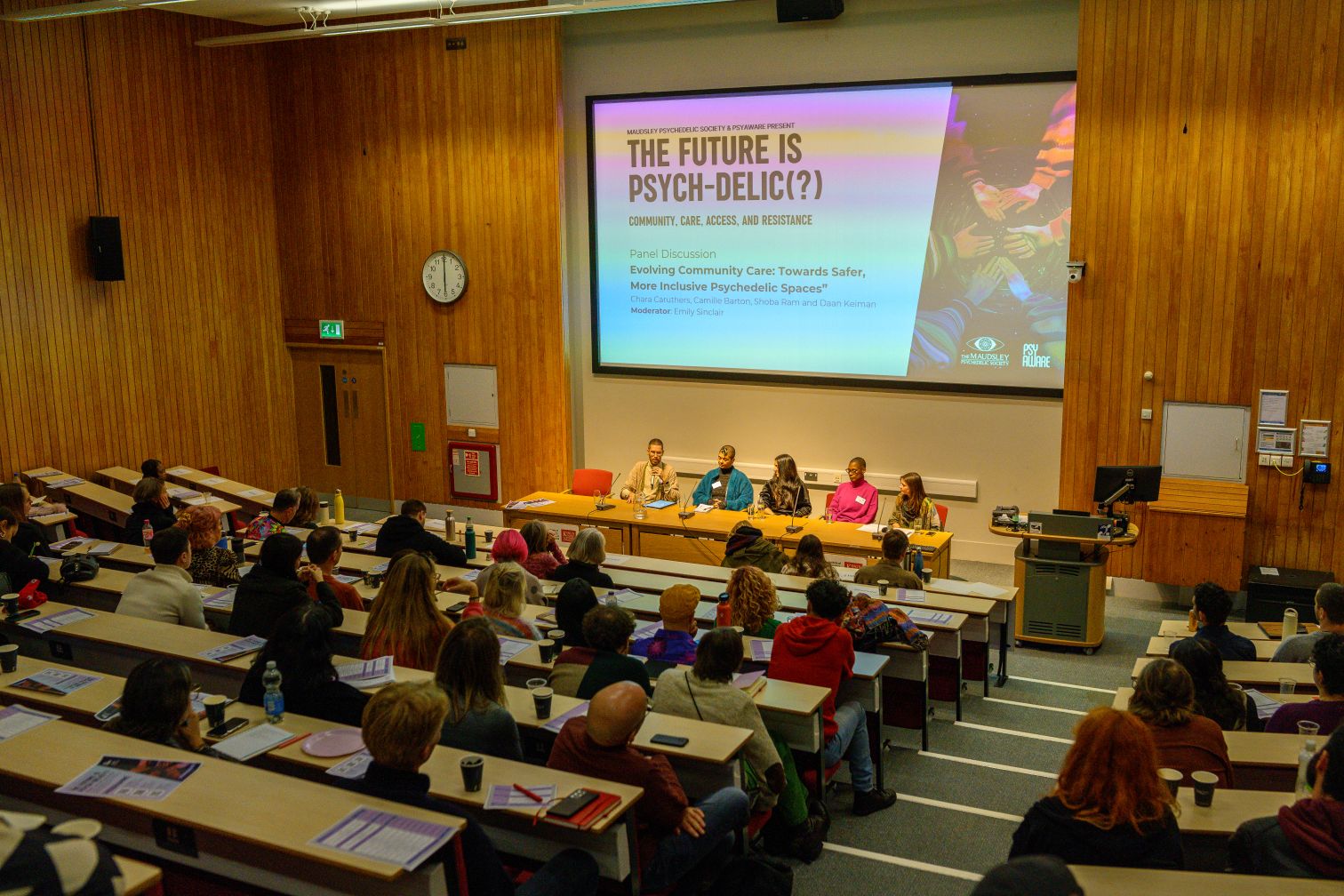
PsyAware’s recent event, “The Future is Psychedelic: Community, Care, Access, and Resistance,” offered a timely counterbalance to this narrative. The organisation, which advocates for a future where everyone using psychedelics, whether in a clinical setting or for personal exploration, can do so in a safe, supported, and inclusive environment, hosted an intimate and thoughtful discussion into what a genuinely inclusive psychedelic ecosystem could look like.
As organiser Anya Oleksiuk told TalkingDrugs, the event “created a space where people with shared concerns and shared curiosity could come together and feel understood… the start of something new and refreshing, where we could have real conversations and come together as a community to face the issues we are seeing.”
A collective spirit was clear throughout the room. Many travelled long distances to attend, with others volunteering to make it happen — bringing a true feeling of a community effort. Accessibility was also central, with PsyAware offering free and reduced-fee tickets. That commitment to inclusion shaped both the tone of the evening and the conversations that unfolded.
The room brought together harm reduction and regulatory professionals, clinicians and retreat practitioners, and people with lived experience of the harms of psychedelics. That diversity of perspective set the tone for a refreshingly honest discussion on wide-ranging topics: from psychedelic harms to the colonial overtones of the Western psychedelic renaissance, to the details of building psychedelic communities we both want and need.
Why we need to acknowledge the harms of psychedelics
Psychedelics are increasingly accepted across mainstream Western societies. Their regulation is accelerating, fuelled by growing promises of how they may “revolutionise” mental health care. This growing acceptance has, however, produced a worrying form of psychedelic exceptionalism — a culture in which the risks are minimised, ignored, or treated as politically inconvenient.
Much of this reluctance comes from fear: fear that acknowledging harms could end all progress, or jeopardise research funding. But as several speakers emphasised, refusing to talk about risks works against what the movement truly needs. The only way to ensure psychedelics are safely and legitimately integrated into society is to recognise and plan for the full range of possible outcomes.

Engaging with psychedelics’ harms
While many people use psychedelics without long-term problems — one study found 59% of lifetime consumers reported no challenging events — the challenges others face post-experience cannot be dismissed if they’re to be more widely accepted. 9% reported functional impairment lasting more than a day following difficult experiences, and 2.6% sought medical or psychological support afterwards. Common issues include anxiety, fear, existential distress, social withdrawal, depersonalisation and derealisation. For some, these symptoms persist: over a third reported problems lasting beyond a year, and one in six beyond three years.
One speaker, Ed Prideaux, spoke about his early recreational use, describing taking several heavy doses of 1P-LSD within a few months. The aftereffects blurred into his ordinary life: “the wallpaper would be melting while my parents watched TV.” Researching his symptoms led him to understand he had developed hallucinogen persisting perception disorder – a documented yet poorly understood condition.
“It was intensely isolating to have this odd experience, that no one really understood,” he said. Even within psychedelic spaces, he found that “a couple of people… were convinced it was something of a myth.”
Harms are not limited to recreational contexts. In clinical trials and retreat settings, other risks have emerged. One study found 8% of participants reported that they or someone they knew had been subjected to inappropriate sexual contact by a psychedelic sitter, guide, or practitioner. This topic was explored in an investigation by Psymposia. Conference speakers also referenced how psychiatrist Ben Sessa’s sexual misconduct in the UK, after which a trial participant died by suicide, had been largely swept under the rug by the psychedelic movement.
Other harms are structural. Western clinical research remains overwhelmingly White-dominated, both in researcher and participant demographics. Inadequately trained White guides and no culturally matched practitioners can make these settings unsafe for people of colour. Sara Reed’s experience — being told “you sound white” by two White therapists during her session — illustrated how moments of openness and connection can be mishandled or dismissed without appropriate guidance.
This homogenised view of psychedelics reinforces colonial structures and sidelines non-Western and Indigenous traditions, even as these same traditions often provide the legal precedent for contemporary psychedelic use in South America. At the same time, the over-medicalised approach risks funnelling access solely through pharmaceutical companies.
Finally, trial designs themselves may cause harm through inadequate aftercare. Short-term integration and one-off follow-ups can be insufficient to truly help people. Ian Roullier, former trial participant and co-founder of PsyPAN, shared another former trial participant’s challenges. They were labelled a non-responder during a Compass Pathways clinical trial. After the trial, she sought help from therapists to integrate and unpack her trial experience, and faced an alarming level of stigma, despite having accessed psychedelics in a legal and controlled setting.
Clinical trials also risk dangling the promise of transformation without providing the sustained therapeutic space required to work through complex issues. Participants often report a desire to seek another dose, but are currently left with no legal way to access one. As Ian raised in the discussion, ensuring compassionate access to psychedelics following clinical trials is imperative to ensure the wellbeing and dignity of trial participants, yet is a thorny issue while they remain illegal.
How to ensure psychedelics are accessed and used with proper care?
Speakers emphasised that ensuring safety requires structural change. Full legal regulation — rather than a medical-only, mostly privately prescribed model as seen with cannabis in the UK — is essential to prevent inequitable access. In the interim, clinical trials need redesigning to include more diverse participants and ensure safer environments. This kind of work must be funded and prioritised if it is to truly fix the growing inequality in psychedelic research.
Education is key: organisations like PsyAware fill a critical gap by openly discussing risks and challenging the myth of guaranteed benefit. Others must work on proper psychedelic practitioner training, vetting, and quality assurance processes to protect patients from harm.
How can we build communities of care?
One of the event’s most powerful themes was the need to construct collective, not individual, forms of support. Several groups are already laying groundwork for this: Acer Integration, PsyPAN, and Psychedelics in Recovery (PIR) among them. But their work, while important, is only beginning. Communities of care must also be built at local levels, grounded in shared responsibility and mutual aid.
Oleksiuk described how PsyAware is building a Community Hub, a confidential, trauma-informed and culturally informed point of contact for people at risk of harms from psychedelics, long-term aftereffects, or financial barriers to care. The aim, she explained, is to offer education, support and aftercare at a time when the broader psychedelic landscape is increasingly shaped by “billionaires, the far-right, and tech and pharma giants who often put profit and prestige above safety and care.” Building an independent structure — rooted in support, care, and connection — requires buy-in and support from a wider community.
That ethos aligns with the wider principles discussed at the event: learning how to “agree how to disagree,” committing to healing both the harmed and the harmer while centering the harmed. This approach echoes the work of people like Loretta Ross, a professor and activist. Her work prioritises “calling people in”, rather than calling out problematic behaviours, avoiding community fragmentation. With ever increasing political divides across groups, this change in frame can seem more daunting and difficult than ever, but it’s now also more important than ever. It also means incorporating healing practices in our day to day: from checking in on friends or community members with motivational interviewing techniques, to rebuilding a sense of spirituality and connection to nature in Western contexts.
PsyAware’s event made it clear that the future of psychedelics should not depend on clinical use. If these substances are going to have a meaningful role in addressing the mental health crisis, they must be embedded across society in a way that acknowledges its risks, honour its users’ diversity, and prioritises collective care.
In other words: psychedelics might open the door, but community will get us through it.

