
On 8 October, Angelia Pranthaman’s brother Pannir was executed in Singapore’s Changi prison, having spent eight years on death row for smuggling 51 grams of heroin from Malaysia in 2014. The Singaporean justice system, besides being incredibly strict, is rather opaque; as a result many defendants and their families understand little of their own rights. Despite repeated appeals and co-operating with the law, Pannir was not granted leniency. He was held in near-total isolation, granted only weekly, family visits of one hour. Over the course of his incarceration, Pannir spent his time composing music and poetry.
Angelia wrote in 2019 about her brother’s life and early imprisonment. Now, Angelia describes how the prison keeps her apart from her brother, even after his death.
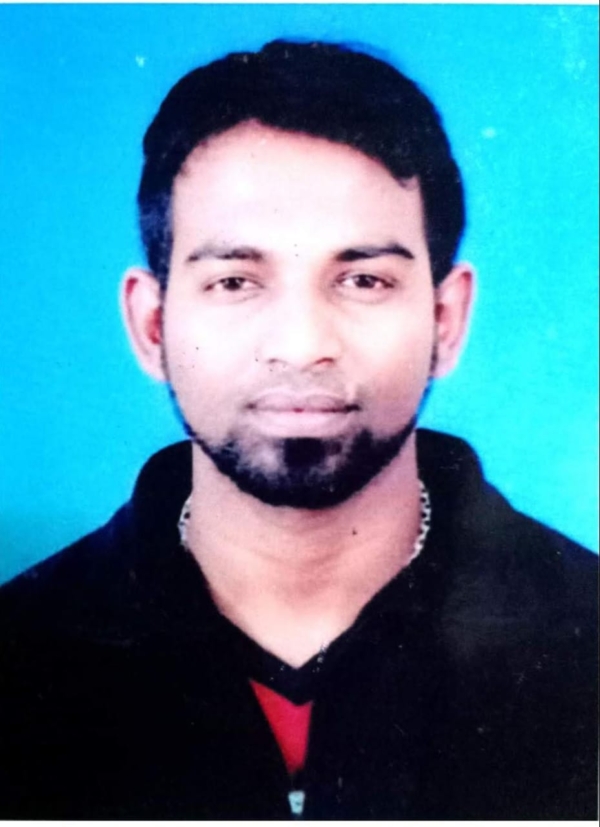
On 8 October 2025, Singapore took my brother’s life.
But what I did not expect was that even after his execution, more would be taken from us.
I am writing this not as a lawyer, not as an activist — but as a sister who stood in that cold room at Changi Prison, receiving my brother’s belongings after his death, only to discover that his final handwritten letters were missing.
And what happened next broke whatever trust and respect I had left.
The shock: they never told us anything was missing.
When the officers handed over Pannir’s belongings, they said nothing about missing pages.
Nothing about withheld writings.
Nothing about letters that had been taken away.
We discovered it only because we knew Pannir had written more.
We checked the items. Something was wrong. The letters were incomplete. Pages missing. We asked:
“Where are the rest of his letters?”
At first, the officers denied anything was missing.
We asked again.
And again.
And again.
Only when I insisted and refusing to stay silent they finally reveal that some of Pannir’s final handwritten notes had been removed. Only then.
Not upfront.
Not honestly.
Not transparently.
We were already grieving the unimaginable. Why did we have to fight just to know the truth about our brother’s last words?
Can a family be denied a final letter?
We still cannot understand it. The execution was carried out. My brother was gone. What possible harm could a handwritten farewell letter cause?
Those pages belonged to our family. They were written for us, his parents, his siblings – the people he loved until his last breath.
What right does any officer have to take away a person’s final message to his family? What right does anyone have to censor a dying man’s last words?
To us, it felt like punishment continued even after death both for Pannir and for us. A cruelty after the final cruelty.
A failure of responsibility and compassion
In that moment, standing in Changi Prison, I realised something painful: we were never treated as a grieving family. We were treated as if we had no right to ask questions.
No right to clarity. No right to the final pieces of our own brother. To withhold those letters was one thing. To deny it when asked, and only admit it when pressed, was another. That act destroyed whatever respect I once had for the system.
A system that could not even offer honesty to a family whose son had just been executed. A system that could not recognise the importance of a dying man’s final words. A system where transparency was replaced with silence, avoidance, and cold procedures
This is bigger than Pannir – this is about dignity.
Regardless of one’s position on the death penalty, regardless of legal justifications, there is a universal truth: A family has the right to the final message of their loved one. Those letters were the last part of Pannir. The last thing he wrote with his heart and his pain and his faith. We deserved to hold them. We deserved to read them. We deserved to hear his voice one last time. Instead, we were left with questions, confusion, and a deep wound that continues to bleed.
A plea for humanity
This article is not an attack. It is a plea, a cry from a sister whose family suffered more than necessary. Transparency matters. Compassion matters. Dignity matters. We cannot change what happened to Pannir. But we can speak the truth of what we lived — so that no family ever again has to discover the loss of final letters only after demanding answers in a room filled with silence. To this day, I remain haunted by one question: What did my brother write that I will never get to read?
Our lawyer formally emailed the prison management to request the return of those pages. Until today, we have received no reply. No acknowledgement. No explanation. Nothing. Why is it so hard to return a man’s own letters to his own family? Why must a family continue suffering even after the execution is over? Why take his voice when his life has already been taken?
I am still demanding for my brother Pannir Selvam’s final handwritten letters. No legal system, no authority, and no officer has the moral right to decide what a man can or cannot say to his own family in his final moments. Those letters belonged to us. They were written for us. They were the last messages from a brother who knew he would not see us again. Give us what rightfully belongs to our family. Give us the last words my brother wrote with his heart.
In memory of Pannir Selvam Pranthaman.
Forever my brother.
Forever my heart.
Sangkari Pranthaman.
TalkingDrugs contacted two separate representatives of the Singapore Prison Service to provide a comment; neither responded to our requests. Another publication claims that the Changi Prison Service withheld Pannir’s papers “for screening”, which the family was not informed would happen.