On 9th May 2022, just one week after Politico leaked the draft Supreme Court opinion overturning Roe v. Wade, Vanessa Williamson and John Hudak at the Brookings Institute made an ominous prediction.
“History suggests that the prospective anti-abortion laws are likely to echo the ‘War on Drugs,’” they wrote. “[T]hey will not eliminate the behaviour that is outlawed, but will, through biased, targeted enforcement, disproportionately harm poor people and people of colour.”
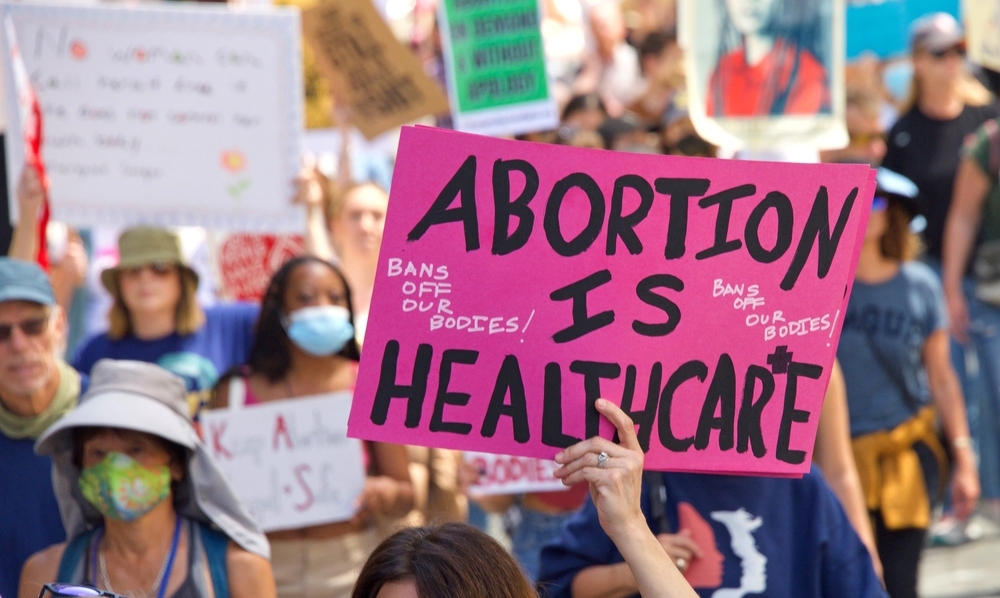
Two years later, with the removal of constitutional protection of abortion rights in the United States leading to an explosion of anti-abortion legislation, their article seems scarily prophetic. Within six months of the decision, 15 states had banned abortions. The effects of criminalising abortion in the US run parallel to drug prohibition: the prohibited activity has not stopped, only gone underground. Abortions have become more dangerous, and these harms are particularly felt by already-marginalised communities.
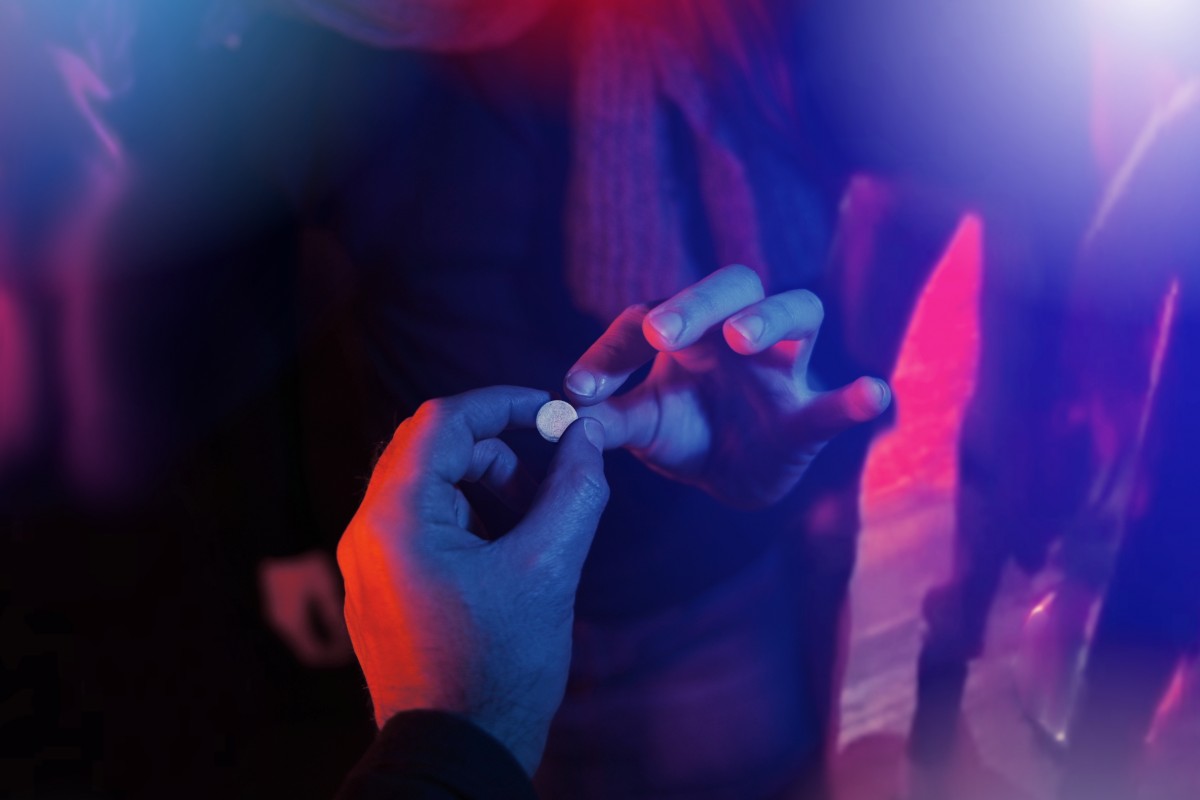
But in the last several months, the connections have gone one step further. Anti-abortion policymakers in Oklahoma and Louisiana are using drug control laws to criminalise abortion medications and those administering them. Drug harm reductionists know from decades of prohibition that widening the net of punitive drug laws to capture people will exponentially increase existing harms.
Punishing medical abortions as “drug trafficking”
Medical abortion (also known as medication abortion) is extremely safe and effective. The most common regimen involves mifepristone, which blocks progesterone, and misoprostol, which causes cramping. It is currently approved by the FDA through 10 weeks of pregnancy.
American anti-abortion politicians have a problem. Despite a friendly Supreme Court and specific states restricting or banning abortions, they continue to be legally available in other, sometimes neighbouring, states. In particular, abortion medication is easier to access and receive by mail. Research from the Guttmacher Institute found that in 2023, medication abortions accounted for 63% of all abortions in the formal health care system, a 10% increase from 2020.
The demand for abortions has not slowed down since the ban: in fact, research shows there’s been an increase of 23% in medical abortions in formal healthcare settings for states with no abortion bans in 2023, compared to 2020. To eradicate these drugs, anti-abortion policymakers are increasingly turning to the language and policy tools used by the War on Drugs to crack down on substance use.
House Bill 3013 in Oklahoma is one example. Abortion is completely banned in Oklahoma with limited exceptions. Introduced in January 2024, this bill would bring felony-level drug trafficking charges against people who deliver or mail “abortion-inducing drugs” or possess them with the intent to deliver to someone, punishable with fines of up to $100,000 and up to ten years imprisonment. The legislation supposedly does not target pregnant people who take the medication, just those helping them. However, the definition of “traffickers” is left broad, providing little clarity and reassurance for pregnant people. While the bill passed in the House in March 2024, it has not yet been made into law.
Language around abortion “drug trafficking” is gaining traction in the American anti-abortion movement, and its proponents explicitly link abortion medication to illicit drugs. PreBorn!, an anti-choice organisation, writes on its website: “Most of us have seen enough movies to know what drug trafficking is, how it works, and the dangers… But did you know there’s another version of drug trafficking that always results in one dead and one forever wounded, because death is the very purpose of every transaction?”

Not only are these people spreading lies about the safety and legality of the abortion pills, they are deploying stigmatising ideas of drugs, the people who take and sell them, whipping up a moral panic to justify their proposals for increased surveillance and targeting.
“Controlled dangerous substances”
Legislators in Louisiana – another state with one of the most restrictive abortion bans in the country – have gone further. On 24 May, Louisiana Governor Jeff Landry signed Senate Bill 276 into law, classifying mifepristone and misoprostol as Schedule IV controlled substances under the state’s Uniform Controlled Dangerous Substances Law. Other Schedule IV substances include sedatives like chloral hydrate, stimulants like modafinil, and painkillers like tramadol.
The law is the first of its kind: it creates a “coerced criminal abortion” offence and means that possession of either drug is punishable by up to 5 years in prison and a fine of up to $5,000, with harsher punishments for possession with intent to distribute, effective from October 1st. There is an exemption for possession by pregnant people for their own consumption, or if the pills are prescribed. But reproductive rights advocates have been quick to point out that the law will nevertheless lead to additional red tape and create a climate of fear.
Republican Senator Thomas Pressly authored the Senate Bill 276: driving his motivation for it was the fact that his sister had been given abortion medication without her consent by her former husband. Pressly frames his sister’s case as “clear proof that these drugs are being weaponised and are a risk to the public health.”
Drug scheduling creates additional bureaucratic requirements such as locking the drugs in specific places, or for the doctor to issue prescriptions for their use electronically or through pads (rather than instantly); this could create a potentially lethal delay in providing emergency care. Both mifepristone and misoprostol have a variety of other medical uses, including in childbirth and miscarriage care; delays to their access could kill. Perhaps most alarmingly, scheduling mifepristone and misoprostol means that all prescriptions will be tracked in a state database, meaning prescribing doctors and patients could be investigated for their use.
Outcry from physicians, feminists, and pro-choice politicians swiftly followed, rightly arguing that these drugs do not belong in the category of dangerous substances, and that the law represents a dangerous precedent for scheduling drugs with no known addiction potential. While they are correct that both mifepristone and misoprostol are extremely safe with no risk of recreational use, there has been a disappointing lack of an overall criticism – particularly from those who claim to be concerned with bodily autonomy – that drug control tools are harmful, ineffective, and cruel across the board, not just when it comes to criminalising medical abortions.
Lessons from the drug war
Understanding recent moves to criminalise abortion medication as yet another expansion of the remit of drug-related crimes reveals important lessons.
Firstly, these tools are broken, and they will fail on their own terms. Prohibiting the pills involved in medical abortions will not stop abortion, in the same way that prohibition has not stopped drug use or the international drug trade. It will, however, make abortions more dangerous. The worst effects will unfold along class and racialised lines, further isolating people from sources of support that are already desperately needed, particularly in a nation with such unequal access to healthcare. Despite arguments from anti-abortion advocates to the contrary, prohibition does not protect women or address their vulnerabilities – it exacerbates them.
Secondly, reproductive rights advocates are making a mistake when they argue in favour of abortion pills by juxtaposing them with other drugs. As one columnist wrote: “the category of controlled substances includes those medications known to cause mind-altering effects and create the potential for addictions, such as sedatives and opioids; abortion medications carry none of this potential.”
Even if it is true that these are different types of drugs with distinct effects, this argument won’t convince right-wing politicians who believe deeply in foetal personhood and are not as driven by the scientific evidence of the pills’ safety. It also implies that criminalisation is an appropriate way to respond to certain substances.
At the same time as lawmakers criminalise medication abortion, the same states are continuing to intensify penalties for drug-related crimes – for example, Louisianans now face up to 99 years in prison for packaging fentanyl to appeal to minors. It is important to understand these legislative developments in parallel and how they inform each other.
Finally, the history of the war on drugs suggests that these laws are just the beginning. Much like drug prohibition, the anti-abortion movement operates globally and is extremely well-organised. Groups like Susan B. Anthony Pro-Life America have openly acknowledged that they hope to export Louisiana’s laws to other states, with international networks gaining traction too.
In the face of such attacks, the only solution is to mobilise support networks who are similarly coordinated. Building connections between harm reduction and reproductive rights groups to fight the same harmful laws will enable expansive solidarity, and a strategy to fight back. The shared demand is for laws that respect the bodily autonomy of all people, free from stigma or the criminalisation of healthcare.