

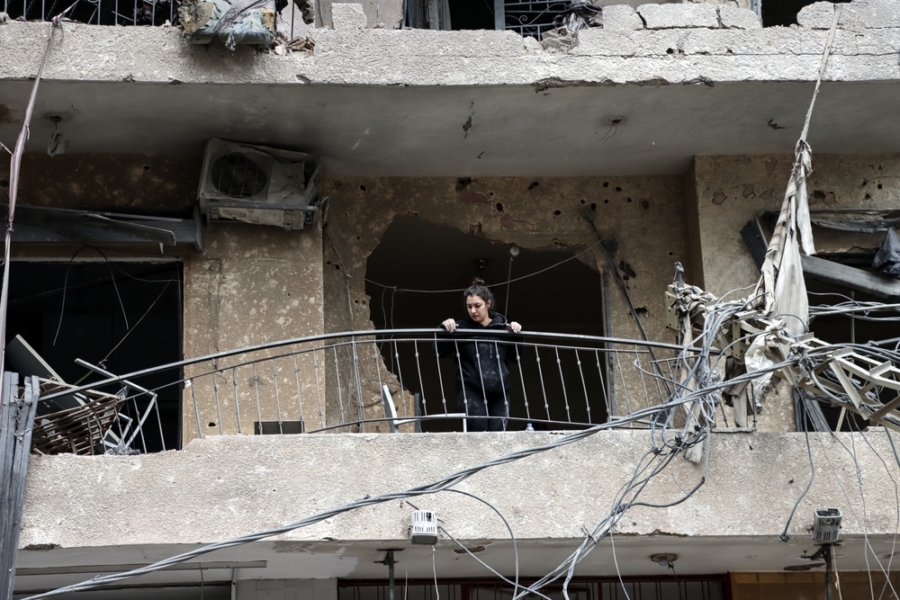
On 3 March, one day after Israel bombed Beirut for the first time since the so called ceasefire of November 2025, Lebanon’s Narcotics Department of the Ministry of Public Health, in charge of the Opioid Substitution Therapy (OST) programme, announced an exceptional measure allowing OST patients to receive one month worth of medication per prescription. The prescriptions were previously capped at two weeks, even in times of crisis, and requests to extend them were repeatedly rejected by the ministry. Amid war, chaos and destruction, this piece of news provided much needed relief to over one thousand OST service users in Lebanon.
People on OST have had it rough over the past six years. Medication shortages, price hikes, successive waves of Israeli attacks and the ongoing war have repeatedly jeopardised their ability to safely access and afford this essential medicine.
“It’s a great thing,” Khaled, a service user on OST for the past 15 years, told TalkingDrugs.
“You don’t have to go down to the dispensary as much, so you’re safe. [Israel is] bombing everywhere now.”
Lebanon has been living under daily Israeli bombardment since October 2023, creating serious humanitarian concerns. Despite the agreed upon ceasefire in November 2025, which was violated more than 14,000 times by Israel, Beirut and its suburbs have been targeted again since the beginning of March 2026, shortly after the US and Israel launched a joint war on Iran. To date, 20% of Lebanon’s population – roughly one million people – has been forcibly displaced.
A system under strain
To understand how the decision to extend OST prescriptions came about and its impact on service providers and service users, TalkingDrugs spoke with Executive Director Tatyana Sleiman and Clinical Coordinator Dala Fakhreddine of Skoun, a non-profit drug treatment outpatient facility. Skoun is located in Rafic Hariri University Hospital (RHUH), where Beirut’s OST dispensary is also housed – an area deemed a “hot zone” for being highly targeted by Israeli strikes.
Since the beginning of March, a fourth of Skoun’s staff has been displaced after the Israeli army ordered the forced evacuation of 23 square kilometers of Beirut’s suburbs. A map shared by the Israeli army warning citizens they are in a danger zone about to be struck also encompasses RHUH itself.
View this post on Instagram
Accessing dispensaries or service providers had already become an issue during the last round of fighting, where more than half of surveyed OST patients were displaced and faced difficulties accessing their medication. A joint survey conducted by three NGOs – Skoun, AJEM and SIDC – among OST patients found that one in three reported difficulty obtaining prescriptions, and over one in four struggled to reach dispensaries.
In this context, the decision to extend prescriptions and introduce greater flexibility responds directly to these constraints and marks a shift from the previous intransigence of the ministry wary of potential abuses and misuses of the medication. Other countries, like Ukraine, similarly extended OST prescriptions when the Russian invasion compromised thousands’ access to their medications.
“We know from the last war that RHUH is in a hot area, and [the Narcotics Department] were trying to ensure that the majority of patients get their prescription, especially that the RHUH dispensary has the highest load. So in case the hospital is hit and the dispensary becomes inaccessible, a big load of patients has already secured their medication for a month,” Sleiman explained.
Sleiman commended the Narcotics Department’s proactiveness since the start of escalations: “We’ve been going back and forth in the past five years, with every emergency, to get flexibility with a number of things, not just the length of the prescription, or changing the dispensary. So this time, the department really took the lead in seeing how they could facilitate. They extended the prescription to a month, but they are also facilitating changing dispensaries, simplifying the protocol and simplifying the change between prescribers So overall there’s been a lot less rigidity in the OST response.”
Mental health, adherence and everyday disruption
Beyond logistics, the toll of war has impacted patients’ mental health and well-being. During the last round of fighting, the survey respondents highlighted that they “need longer refills so we don’t panic every time something happens.”
Fakhreddine explained that, “everyone’s mental health is affected regardless of displacement, everyone has anxiety around work, of the instability, the lack of visibility, it’s impossible to plan. It’s the same themes as in 2024” But despite the traumatic circumstances which can often lead to an increase in drug use, Fakhreddine assures that so far, there have been no relapses among OST service users.
However, she noted that the war has impacted adherence to treatment follow-up : “some people don’t want to do [sessions] online, some of them don’t have internet or they don’t have privacy, regardless of displacement.”
With the war, even the most mundane parts of everyday life have been impacted. Many forcibly displaced people are now living in collective shelters or in tents on the streets while others are hosting numerous displaced family members, with many people living in the same space.
Khaled tells me his neighbourhood, which was already experiencing massive overcrowding as people sought refuge there, was recently bombed, making it difficult to reach his home.
Speaking of the prescription extension, he said, “most of us are barely making it financially, so having to take one trip instead of two per month [to the dispensary], saves us money.”
The Narcotics Department’s decision to extend the prescription was initially supposed to be based on a clinical assessment, but in practice, “the one-month prescription is available to all, regardless of the clinical assessment and the potential for misuse,” said Fakhreddine.
“Right now the priority is safety.”
Advocacy behind the shift
Advocacy on the right to uninterrupted access to OST began as early as 2021 when a shortage of OST medication had been announced by the Ministry of Public Health as a result of Lebanon’s financial collapse. Service providers, particularly NGOs, worked together to mitigate the shortage by reducing patients’ doses and securing donations to replenish stocks.
Since then, their advocacy has led to several milestones, including doubling the number of dispensaries from four to eight by the end of 2025, and breaking the monopoly in medication supply, which decreased prices and provided patients with options.
“We’ve been talking about OST in the broader health sector (in charge of the health emergency response in the country). In the beginning, when I would say OST no one knew what it was, now I no longer have to explain myself,” said Sleiman. She further highlighted the new minister of health’s flexible approach, in contrast to his predecessors who were more rigid and skeptical of people who use drugs and the OST program in general.
The exceptional measure is hailed as a success, highlighting the role of NGOs and people who use drugs and their continued advocacy for their rights. Khaled, who himself participated in advocacy initiatives for the accessibility and affordability of OST, told TalkingDrugs he’s proud of what he did, even “if it helps one person.”
For her part, Sleiman highlighted the success in building alliances with different stakeholders, adding that “beyond dispensing, the big win is the change in the perception. [The view that] people who use drugs are a priority and that OST is a chronic medication that cannot be interrupted has been consolidated within the ministry.”
However, this ad hoc measure cannot remain exceptional. “It has to be institutionalised and not dependent on particular persons. So the first step when the situation is calmer is the adoption of the updated protocol and the emergency annex,” stressed Sleiman in reference to tools developed by civil society and submitted to the Ministry of Public Health for adoption.
“As long as we don’t run out”
Despite the recent successes, both the OST program and those it supports remain in a precarious position amid Israel’s continued assault on Lebanon.“I just hope [the government] keeps providing it and they won’t tell us that the airport or port has been hit,” Khaled warned in reference to points of entry of the medication in the country.
“As long as we don’t run out, because if we do, we’re back to heroin.”

