What do we need to exist in a society that often feels as though it’s built for someone else? This question emerged as the unofficial thread that ran through the 2025 edition of HIT Hot Topics harm reduction conference.
As a neurodivergent person myself, sitting quietly in a conference hall for hours can be deeply exhausting. This is something I have long accepted as part of daily life; so, before this year’s conference, I prepared carefully: I got a good night’s sleep, took my prescribed stimulant medication, tactically timed my coffee intake, and used my loo breaks to decompress.
Without adaptations and the necessary support, people will do what they can to get by. This theme surfaced repeatedly across all of the talks at the conference, which featured discussions centred on neurodivergent people, ketamine users, the Māori community, LGBTQ+ communities, and people who use image and performance enhancing drugs (IPED). Speakers explained how these groups navigated systems not designed with them in mind and what genuine support might look like.
Self-medication in the absence of support
The conference opened with Alistair Bryant from Cranstoun chairing three presentations on neurodivergence and drug use from Miriam Jaber (Harm Reduction Worker, East Sussex, UK), AJ Martin (Co-leader of the Benzo Research Project) and Beccy Rawnsley (Researcher/Consultant at LEAP and Coact).
A striking proportion of people who use drugs are neurodiverse. In a study of 3,558 people using addiction services, 40% screened positive for ADHD symptoms and yet 5–10% of those meeting the full criteria had never received a diagnosis.
AJ shared some of his findings from the Benzo Research Project around communities of young people using benzodiazepines: “All of us had either ADHD, depression, anxiety, autism, PTSD, or all of the above and more. The only thing we had in common was seeking drugs as a coping strategy,” – a young adult from Brighton.
Miriam, AJ and Beccy explained how people with neurodivergent conditions such as ADHD and autism can struggle to cope in a fast-paced world that demands constant attention. Environmental overstimulation, difficulty managing daily tasks and work, and pressure to meet social expectations leave people seeking something to make life more manageable. With diagnostic waiting times in some parts of the UK reaching 10 to 15 years, accessing timely support through official channels is often impossible. In its absence, many people turn to the unregulated drug market.
As one person with ADHD described it: “[Substances] slowed my mind down, helped me feel “normal” and like I wasn’t living in a storm in my own body…people can’t see my disability so they think it’s not as painful as it is”.
But relying on illicit markets carries significant risks: from being exposed to fake stimulant medications to coercive dealing practices, such as being offered freebies to encourage dependence.
Seeking harm reduction when resources aren’t built for you
Even when people reach out to support services, certain groups are less likely to be understood if they fall outside the “traditional patient model,” particularly if they have compounding needs or live in rural communities. Patriic Gayle from Gay Men’s Health Collective highlighted the challenges by sharing the story of Tom: “Tom is told group work is required for his recovery. From past experiences in group settings, he faced microaggressions for being gay. In residential detox, discussing chemsex and identity felt like coming out again.”
Many drug and alcohol services are built around heteronormative assumptions. Intake forms often assume heterosexuality and staff may lack understanding of queer identities, chemsex and community-specific trauma. At best, people feel misunderstood; at worst, they feel unsafe.
Michelle Hughes from Public Health Wales highlighted how people living in rural communities are routinely overlooked when it comes to funding for services, driven by the assumption that drug issues are primarily an urban issue.
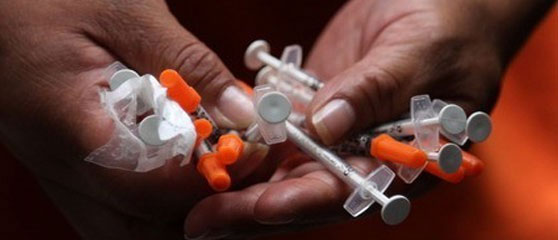
One person from rural Wales explained their weekend struggle: “Everything is closed for the weekend. You either get them [clean needles] before and make them last the weekend. Its fucking hard. You gotta go reuse the ones that you’ve already had, or the ones you’ve already used”.
Since before the COVID-19 pandemic, both the number of people accessing needle and syringe programs (NSPs) and the number of syringes dispensed have fallen by 50%, leaving people with fewer safe options for consumption.
When systems fail to accommodate people—whether they are neurodivergent, queer, or simply don’t fit the standard patient model of care— they are forced to do what they can to help themselves, often at great personal risk. Restricting access so that the only safe treatment is nearly impossible to access means people get their medications illegally and self-medicate through criminalised routes, significantly increasing their risk of harm.
How can we increase access to care for these groups?
Stigma—both towards marginalised groups and towards drugs themselves—decreases access to harm reduction services. This is particularly true for people who use ketamine.
Lydia Plant, the CEO of Bristol Drugs Project, explained how, despite well-meaning efforts to reduce ketamine addiction, media-driven fearmongering messages deter people from seeking support, often until it is too late. For example, frightening stories of bladder removal in the mainstream media often stop people from reaching out to services. At the same time, early interventions like tolerance breaks every three days could be enough to prevent permanent damage.
Language, speakers repeatedly stressed, plays a critical role in whether people feel able to approach services. Tuari Potiki from the New Zealand Drug Foundation shared their Māori-led approach to reshaping conversations about drug use. Tuari and his team developed a new language framework grounded in local culture, such as creating a new term for drugs. “Kai Whakapiri”, which literally translates to “something consumed to increase connection”, could be a useful new term that shifts away from the existing “taru kino” word – which means ‘bad or evil thing’.
Peder Clark from the University of Strathclyde reflected on the early days of Manchester’s rave scene, where in absence of services providing real harm reduction advice that wasn’t focused on abstinence, some young people created their own magazines, like Chillout, and Peanut Pete that provided judgement-free harm reduction information.
However, speakers emphasised that language changes must be matched with concrete efforts to support marginalised communities. Patriic cautioned that some services have adopted inclusive language, creating the illusion of collaboration with the LGBTQ+ community without meaningful support.
What practical support can we give people in these spaces?
While previously the Loop was able to conduct drug testing for everyone on site at festivals, since 2023, Home Office licencing has restricted the Loop’s testing services to only “dependent drug users” at Bristol Drugs Project. Yet, evidence suggests that providing people with accurate information allows them to make safer choices, whether they meet the threshold for dependency or not. Drug checking services illustrate this clearly. The drug checking organisation The Loop found that over 50% of people would throw away a substance after testing if it wasn’t what they thought it was.
The sudden withdrawal of US global harm-reduction funding in 2025 has put immense pressure on drug services globally. Grassroots harm reduction spaces continue to prioritise inclusivity despite cuts to funds and resources, forcing them to get creative. This couldn’t be more true for Release’s Harm Reduction Hub. Riley discussed how the space’s design was created to be a discrete and welcoming space for people to discretely collect harm reduction supplies, have a cup of coffee and get advice.
“I had access to test strips and naloxone and just regular contact when I was at high risk of being alone,” one Harm Reduction Hub visitor shared with Riley. “The Hub supported me in reducing bodily harm and encouraged me to seek medical treatment for an abscess, and they supported me emotionally afterwards.”
Shifting our perceptions of care
Inclusivity should not be treated as a special feature or an added extra. It needs to be embedded into spaces from the moment of inception.
While I still relied on my usual strategies to stay focused, the accommodations at the conference such as fidget toys on the tables and simplified slides made me feel that at least some effort was made to ease my burden. Inclusive spaces and services alone are not enough to reduce people’s need for self-medication. But they can go a long way in reducing some of the burden and harms of existing in a world that doesn’t always accommodate differences.