The current fentanyl crisis in the United States has had various and powerful consequences for Mexico. In the past month, President Trump has threatened to impose additional tariffs on Mexican imports due to the state’s failure — purposeful or not — to stop the flow of synthetic drugs, specifically illicitly manufactured fentanyl, into the US.
Most of the consequences are not new; they date back to at least 2017, yet were largely ignored. One of the key, yet often under-reported, implications of this crisis is the increasingly complicated restrictions that doctors and hospitals must navigate in order to procure legally produced fentanyl for medical purposes – specifically for anaesthesia.
The fight against fentanyl
Despite decades of Mexican war on organised crime and drug trafficking for nearly two decades, continued American pressure for the country to increase its actions against fentanyl have led to the former Mexican Secretary of Foreign Affairs to say in 2023 that “there is no other country in the world that is doing as much as Mexico against the fentanyl that is trafficked into the United States”.
The state’s strategy to combat its trafficking is officially named the “fight against fentanyl”. In practice, this involves three things. First, sending 10,000 troops to the northern border with the US to curb both drug trafficking and undocumented migration. Second, using the army to dismantle clandestine fentanyl laboratories. Third, increase military seizures of illicitly manufactured fentanyl. In addition, the government has launched a misleading nationwide “anti-drug” advertising campaign with strong messaging (“Stay away from drugs. Fentanyl will kill you”) that misinforms the public about the risks associated with fentanyl use and its effects.
It is important to clarify that the fentanyl crisis is experienced differently in both countries. In the US, fentanyl’s harms primarily stem from its (and other analogue’s) adulteration of the illegal opiate supply; this “toxic supply” has killed more than 300,000 people since 2017. Mexico, comparatively, has very little recreational use and harms from fentanyl; the American toxic supply phenomenon is mostly seen in the Mexican cities along the American border. Opioid use in Mexico is still relatively low, representing around 2% of all cases in drug treatment in 2022; its relationship with fentanyl is for production and distribution, rather than consumption.
Given this, it might be expected that the Mexican government would deploy two distinct strategies: address the use of fentanyl on its northern border, and tackle its national illicit production, trade and trafficking. But this is not necessarily the case. While the first issue is one best resolved through a health-centred approach, the government has instructed the military to get involved in controlling drug markets, often in a very violent way.
The known consequences of Mexico’s drug war have been devastating, causing forced displacement and human rights violations where the army has passed – including extrajudicial executions, torture, forced disappearances, and illegal detentions, particularly targeting marginalized youth.
Licit fentanyl as collateral damage
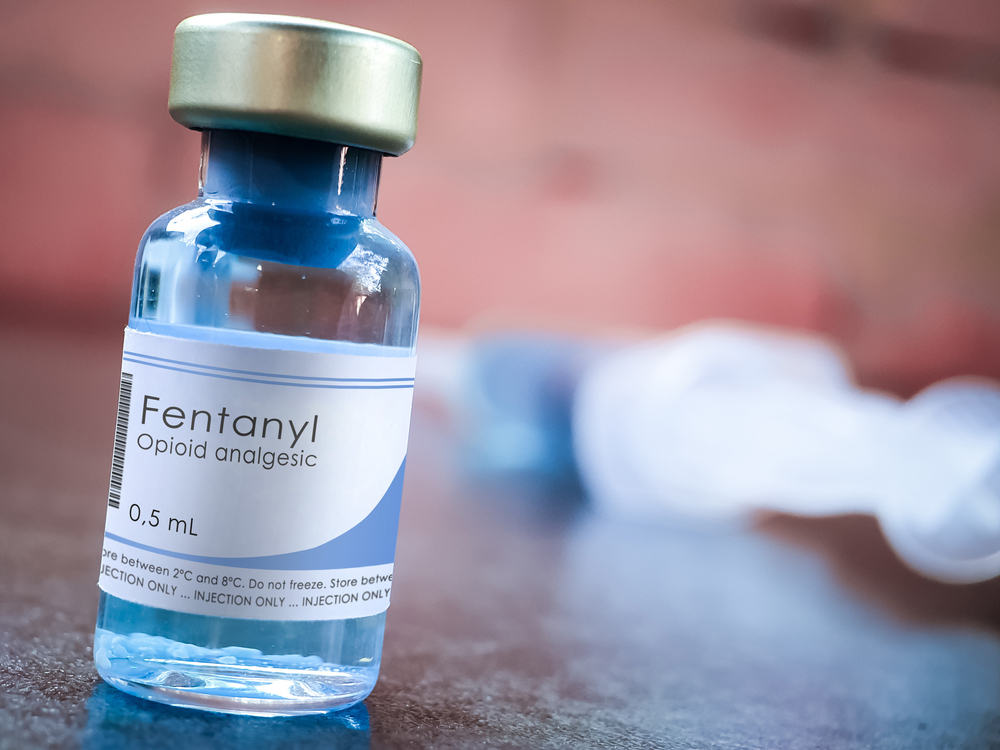
A crucial victim of the “war against fentanyl” has been the distinction between illegally manufactured fentanyl and legally produced pharmaceutical fentanyl. One is made in clandestine laboratories to export for recreational markets; the other is an important medical product, manufactured in strictly controlled conditions, and essential for pain management. Public narratives around fentanyl tend to omit the fact that it was one of the most widely used drugs in Mexico during the COVID-19 pandemic for intubated patients.
While the distinction between legally and illegally produced fentanyl seems obvious, it is not quite. In fact, the former Mexican president Andrés Manuel López Obrador (2018-2024) proposed banning pharmaceutical fentanyl in 2023, claiming it would end its trafficking.
Various medical associations, particularly anaesthesiologists and pain and palliative specialists, contested this claim, stating that “the proposal to penalise the medical use of fentanyl will not reduce the problem” of the United States, but rather will “put the general population at risk” in Mexico. They concluded that “it is naive to think that over-regulating the medical use of fentanyl in Mexico can change black market trends.”
Increased militarisation
Not only is the Mexican “war against fentanyl” being fought on the streets, with the military ramping up counter-narcotic operations that are usually led by police officers, it is also being fought through the law. In December 2024, Mexican members of Congress approved a constitutional reform that prohibits the illicit use of fentanyl.
Almost simultaneously, another constitutional reform was approved to create new offences that merit automatic imprisonment, without investigation or judicial analysis, to those involved in the production, import, export, transportation, and storage of illegally manufactured fentanyl, transgressing basic human rights principles. But there is another series of relatively recent legal reforms on the subject that are practically unknown. Between 2017 and 2024, the Executive Power promoted at least six agreements or decrees to modify laws or create institutions to more strictly control the manufacture, purchase, sale, distribution or transportation of both pharmaceutical fentanyl and illicitly manufactured fentanyl.
These legal changes have led to the creation of governmental institutions that did not exist before or to the incorporation of the military into areas of public administration in which they previously had no involvement: for example, the authorisation for the Secretary of the Navy to decide and intervene in public health matters. In addition, the Legislative Power criminalised new actions related to the use of chemical products that can be used to illicitly manufacture fentanyl, but that are also key ingredients in other perfectly legal substances.
These ambiguous reforms have had questionable but predictable effects. One does not need to be an expert to realise that they imply new layers of Mexican regulation and bureaucracy on pharmaceutical fentanyl, which is already highly regulated by the Mexican health bureaucracy. These measures are also impacting those who use pharmaceutical fentanyl in accordance with the law: pharmaceutical companies, hospitals, doctors and critically ill patients. Other industries that rely on the chemicals covered by these new regulations for legitimate purposes are also adversely affected: for example, for the industrial production of cleaning products.
Fentanyl bureaucracy
As part of a broader ongoing research project, I recently conducted interviews with anaesthetists from the public and private sectors in different cities in Mexico to better understand how all this affects them. The doctors I interviewed use pharmaceutical fentanyl every day: it is one of their main work tools. Given its pharmacological characteristics, they said, it has many benefits that make it preferable to other anaesthetic drugs.
However, some of them mentioned that recently the bureaucracy involved in using this medicine in their hospitals has become excessive and, as a result, is hindering their work to some extent. Although not so clearly, they knew that this was due to the Mexican government’s increasing regulations on the matter. They are also aware that in the government’s narrative and in the information disseminated by the media, there is a certain degree of misunderstanding about what fentanyl is and what it is not.
The anaesthetists interviewed confirmed what has already been reported by various media outlets in Mexico: that there is a lack of pharmaceutical fentanyl in hospitals. This has sometimes led them to perform their work inadequately, putting their reputation and the health of patients at risk. For example, doctors report having to cancel surgeries scheduled in advance, move to another hospital to perform them, or temporarily postpone them until the hospital director obtains the medication. In urgent cases, they were forced to borrow pharmaceutical fentanyl from colleagues who had leftovers from another surgical procedure, or used another anaesthetic, which was less effective and had more side effects for patients.
Some doctors were concerned about the stigma that has emerged about pharmaceutical fentanyl and the medical profession, as if they were going to traffic an ampoule left over from a surgery. They have even had patients who refused to be anaesthetised with this substance. These patients do not base their request on logical, scientific or medical reasons, but on an irrational fear of fentanyl that has resulted from the official discourse and the media. This is why public health experts such as Raúl Bejarano Romero and others have warned in The Lancet in 2023 that the Mexican government’s official strategy on substance use is currently based on ‘stigma and fear’.
Finally, some doctors shared a certain anxiety about the potential risks involved in practising their profession. Between 2021 and 2024, the press in Mexico reported the arrest of at least four anaesthetists, accused in connection with acts related to pharmaceutical fentanyl. These arrests have led to protests and demonstrations in the streets by some doctors who coined the phrase: ‘yesterday we were heroes, today we are criminals’. The term “heroes” references their role during the pandemic, in which, paradoxically, one of the most widely used drugs was pharmaceutical fentanyl in intubated patients. They know it is unlikely, even in a country like Mexico, that they will be arrested, but they share the concern that there is even a possibility that this could happen simply for transporting pharmaceutical fentanyl from one hospital to another.
The long-term consequences of the Mexican government’s ‘fight’ against fentanyl are yet to be seen, both in the United States and in Mexico. So far, it is more or less clear that in Mexico the response to the crisis has favoured military involvement over professional expertise in issues such as public health and that the multiple reforms to the law have not succeeded in curbing the trafficking of illicit fentanyl (or other drugs). What the current war on fentanyl has done, however, is hinder the work of pharmaceutical companies, pain and palliative care physicians, anaesthesiologists, intensive care physicians, and oncologists. And this, in turn, has had repercussions on the health of patients suffering from pain.