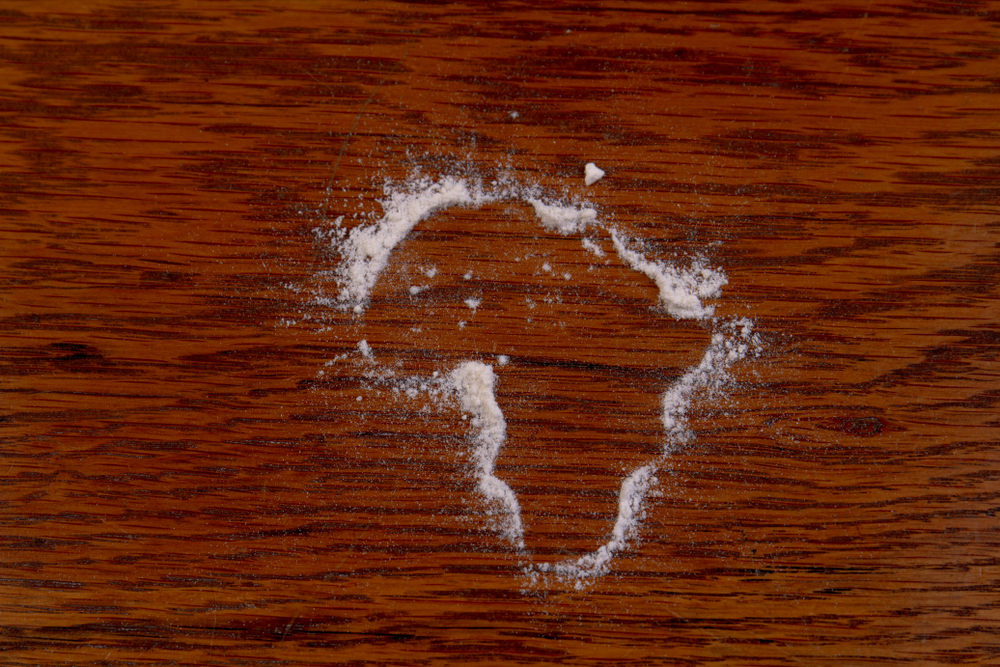
Drug trafficking and consumption markets are expanding rapidly across Africa, fuelled by state corruption and declining capacity to respond, according to a comprehensive new assessment tracking organised crime on the continent.
The 2025 Africa Organised Crime Index, released on 17 November by the ENACT project, reveals rapid growth in cocaine, cannabis, heroin and synthetic drug markets over the past six years. Drug markets are diversifying geographically, state-embedded actors are facilitating trafficking at unprecedented levels, and the continent’s resilience to combat these threats continues to erode.
“Eight years of data and four issues of the Africa Organised Crime Index provide a rich pool of information that gives us an unprecedented overview of illicit economies across the continent,” said Mark Shaw, Executive Director of the Global Initiative Against Transnational Organized Crime.
The Index assesses Africa using two key measurements: criminality and resilience. Criminality scores, ranging from 1 to 10, evaluate the pervasiveness and severity of criminal markets and actors in each country, with higher scores indicating more criminal activity. Resilience scores measure a country’s capacity to disrupt and respond to organised crime through political, economic, legal and social means.
Despite tracking 15 distinct criminal economies, the Index identified drug trafficking as one of Africa’s most rapidly expanding threats. In fact, the data show the cocaine trade as the fastest-growing market overall—outpacing every other form of organised crime on the continent since 2019.
Blooms and busts
Cannabis remains the most pervasive drug market across Africa, with the continent accounting for 44% of all cannabis herb and resin seized globally in 2023—surpassing the Americas, Asia and Europe combined.
North Africa dominates global cannabis production and trafficking, ranking first worldwide for cannabis trade. Morocco alone scores 9.0 out of 10 on the Index’s criminality scale, reflecting its position as a major global producer. Libya and Tunisia also record high scores of 7.0 each, cultivating primarily for domestic markets.
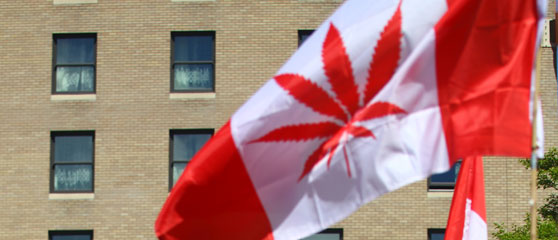
Morocco’s cannabis landscape is undergoing a significant transformation following the 2021 legal regulation of medical and industrial cannabis production. By the end of 2024, the National Agency for the Regulation of Activities relating to Cannabis (ANRAC) had issued over 3,300 permits, with legal cultivation producing more than 4,000 tonnes on 2,700 hectares. King Mohammed VI also granted royal pardons to more than 4,800 people convicted or charged in cannabis-related cases.
However, these reforms have not yet impacted Morocco’s Index score. Licensed cultivation of approximately 5,800 hectares in 2024/25 represents only a fraction of the estimated 27,100 hectares of cannabis grown nationwide, demonstrating how deeply entrenched illicit markets remain despite regulatory efforts.
Cannabis is trafficked along five primary routes: across the Strait of Gibraltar to Spain; across the central Sahara into Libya; eastward through Algeria, Tunisia and Libya; by sea from Morocco to Libya and the eastern Mediterranean; and from Libya east to Egypt and the Levant, and north to the Balkans and Europe.
Cocaine surge
The cocaine trade has surged dramatically since 2019, becoming the fastest-growing criminal market overall tracked by the Index. West Africa and North Africa serve as major transit hubs for Europe-bound shipments, with scores of 6.67 and 4.83, respectively.
Cocaine is transported predominantly on bulk carriers, fishing vessels and increasingly on yachts from South American production zones. From coastal states, the drug is re-exported hidden in legitimate cargo or moved overland through the Sahel to North African ports.
Recent seizures illustrate the scale and geographic spread of trafficking networks. In September 2024, Guinea-Bissau police seized 2.63 tonnes of cocaine from a Venezuelan aircraft—the country’s Index score of 8.50 for cocaine trade reflects its role as a notorious transit hub. Senegal recorded its largest-ever land seizure in April 2024, intercepting 1.2 tonnes. Morocco seized 1.49 tonnes at Tanger Med port in January 2024, concealed in banana boxes.
While West Africa and North Africa continue to dominate, East Africa and Southern Africa are gaining prominence due to under-monitored ports, weak maritime enforcement, permissive political environments, and established shipping links to the European Union.
The volume of drugs transiting through Africa has created significant domestic spillover effects, with these traditional transit countries increasingly becoming destination markets. In Agadez, Niger—a hub on the South America-West Africa-Europe route—cocaine consumption has risen sharply. Smaller-scale traffickers, often paid in cocaine rather than cash, funnel excess supply into local markets when they lack connections to more lucrative destinations.
The vulnerabilities of migrant populations have secured steady demand. Women trapped in sex work to repay smuggling debts face particular exploitation, creating what researchers describe as a cycle of debt and dependency.
Synthetic drugs
Since 2019, the synthetic drug trade in Africa has grown from 4.02 to 4.81 on the Index scale. North Africa, West Africa and Central Africa face particularly severe challenges with non-medical use of tramadol, which has become a major health concern.
Between 2015 and 2023, almost 90% of global tramadol seizures occurred in West Africa and Central Africa. The drug is increasingly used by young people and manual labourers, including miners and drivers, and as a component of low-cost, readily available drug mixtures such as ‘kush’—carrying serious health and social harms.
East Africa and Southern Africa have become important destinations for Afghan synthetic drugs, specifically methamphetamine. Despite the Taliban banning drug production and sales in 2022, methamphetamine production has continued, enabled by laboratories that are harder to detect than heroin-related sites.
The synthetic drug trade scored 6.75 in North Africa in 2025, reflecting the region’s significant challenges with these substances. Four out of five African subregions have witnessed rises in synthetic drug markets.
The African Union formally adopted a continent-wide drug strategy aimed at strengthening responses to the manufacture, trafficking and organised crime networks behind synthetic substances in September, but it is yet to take effect.
State corruption
Among the report’s most concerning findings is the key role state officials play in facilitating drug markets. State-embedded actors—government officials, security forces and politicians engaged in criminal activity—represent the most prevalent type of criminal actor across Africa.
In nearly half of African countries (48%), the influence of state-embedded criminality is classified as “severe.” This finding has profound implications for drug policy responses. When those responsible for enforcing laws are themselves embedded in drug trafficking networks, traditional law enforcement approaches become not just ineffective but potentially counterproductive.
The Index documents how state-embedded actors provide drug trafficking organisations with protection, intelligence and legitimacy that independent criminal groups could never achieve. There is a strong negative correlation (-0.73) between state-embedded actors and political leadership and governance, highlighting how corruption undermines institutional capacity.
Nigeria and Kenya both score 8.0 for state-embedded actors. In Nigeria, criminal groups have used violence to coerce and intimidate voters during elections, while corrupt officials facilitate the cocaine trade. Kenya’s gangs and armed militias have been deployed to instigate violence aimed at influencing election outcomes.
Guinea-Bissau, with a score of 8.50, exemplifies state capture by drug trafficking interests. Criminal actors have co-opted members of the armed forces and high-ranking politicians to facilitate the cocaine trade, resulting in politicians shifting from competing for legitimate control to fighting for control over illicit markets.
Declining resilience
The Index reveals that resilience to organised crime has declined across most African countries since 2019. Currently, 92.5% of African countries are characterised as having low resilience. Of these, 23 countries face the particularly dangerous combination of high criminality and low resilience.
Africa’s resilience ranks among the lowest globally, indicating insufficient capacity to respond to drug trafficking and other criminal threats. This is due to weak rule of law, inadequate law enforcement resources, corruption within justice systems, limited international cooperation, and restricted space for civil society organisations.
The decline in the “non-state actors” resilience indicator since the 2021 Index is particularly concerning for drug policy reform efforts. Governments have imposed restrictive laws on NGOs, harassed activists, and cut off funding channels. This crackdown has occurred precisely when their role is most critical—particularly as advocacy bodies push for drug policy reform based on harm reduction principles.
Democratic strength
The Index found a strong correlation (0.81) between countries classified as democracies and countries with high resilience to organised crime. Democratic institutions, including independent judiciaries and active civil society, are more effective at holding governments accountable and reporting on corruption linked to drug trafficking.
However, democracies remain vulnerable to infiltration by drug trafficking organisations due to the cost of elections and the lack of state-funded campaigns. In contrast, authoritarian regimes tend to actively co-opt or violently suppress drug trafficking. The Index provides evidence that organised crime is co-opted for revenue generation, consolidation of power, and as proxies for illicit activities.
The governance structure of states significantly influences both the scope of drug markets and the effectiveness of responses. While democratic states face higher drug-related criminality in some cases, they demonstrate greater capacity for developing evidence-based, harm-reduction-focused drug policies over time.
Conflict zones
The Index identifies a strong correlation (0.59) between state fragility and organised crime. Countries experiencing conflict, insurgency and violent extremism consistently show the highest scores for drug-related criminality.
Volatile environments provide ideal conditions for drug trafficking networks. Armed groups exploit the absence of state authority to establish control over territory and trafficking routes. In several West African countries, armed non-state actors, including violent extremist groups, increasingly finance operations through drugs, alongside cattle rustling, artisanal gold mining and kidnapping.
Sudan, with one of the highest overall criminality scores (6.63), exemplifies this dynamic. The civil war has created conditions where drug trafficking can flourish with minimal state capacity to respond. Similarly, Mali (6.33) and Burkina Faso (6.03) have seen drug markets expand amid ongoing insurgencies and political instability.
The relationship is mutually reinforcing: drug trafficking finances armed groups, which in turn provide protection for drug trafficking enterprises. This dynamic undermines peace processes and post-conflict reconstruction efforts.
Consumption crisis
Beyond transit trafficking, Africa is experiencing a surge in domestic drug consumption markets. The Index documents how spillover from transit trafficking has created growing numbers of users across multiple drug types.
In Niger’s Agadez, trapped migrants—particularly women in sex work—represent a steady user population for cocaine. Tramadol use has proliferated across West and Central Africa among young people and manual workers. Methamphetamine consumption is rising in Southern Africa, fed by both local production in South Africa and imports from Afghanistan.
The continent’s public health systems are increasingly unable to manage mounting challenges brought on by growing drug and substance abuse. Treatment infrastructure remains grossly inadequate, with most countries lacking sufficient counselling and rehabilitation services.
The Index reveals that “victim and witness support” and “prevention” are among the lowest-scoring resilience indicators, despite some improvement since 2019. Their low scores suggest that supporting people who use drugs is not viewed as a priority intervention by most governments.
This enforcement-first mentality persists despite growing evidence that punitive approaches fail as markets expand. The focus remains on seizures and arrests rather than addressing the public health dimensions of drug use or the social and economic factors driving involvement in drug markets.
Call to action
“This has been an innovative flagship project,” said Eric Pelser, ENACT Programme Head at the Institute for Security Studies. “Our partnership with GI-TOC has produced in-depth analysis that goes beyond research—we’ve taken the recommendations emanating from the Africa Index to the highest levels of policy-making, ensuring that evidence drives action across the continent.”
The Index provides detailed recommendations emphasising the need to build resilience alongside enforcement efforts, address state corruption as a priority concern, protect civic space for non-state actors advocating drug policy reform, and integrate drug market considerations into conflict resolution and development planning.
“While these findings are concerning, they provide the evidence base needed for effective responses,” said Shaw.
“The data, analysis and recommendations in this report can guide policymakers, researchers and civil society in developing targeted interventions to combat organised crime and strengthen resilience across the continent.”