A recent local election in the UK has brought drug policy starkly into the political limelight when the Green Party of England and Wales scored a victory by winning the Gorton and Denton parliamentary seat – a constituency held by the Labour Party for over a hundred years. While it was a decisive victory for the Greens, who primarily campaigned on rising costs of living, the Labour Party abandoned its historically ambivalent position on drugs to widely and crudely criticise the Greens’ progressive approach to drugs.
Labour’s smear campaign
The Green Party has been the most progressive party on drugs in the UK: their manifesto calls for drug decriminalisation while funding public health interventions and exploring all drug regulation.
Labour’s strategy was clear: discredit the Greens’ political ambitions by framing their drug policy as extreme and fringe.

A campaign video ran as a non-skippable advert on YouTube, attacking the Green policies, including the legalisation of drugs.
British Prime Minister Keir Starmer even went so far as to label Green leader Zach Polanski as “high on drugs and soft on Putin”, doubling down on his support for drug criminalisation, claiming that legalising drugs would be “disgusting” and could turn playgrounds into “crack dens”.
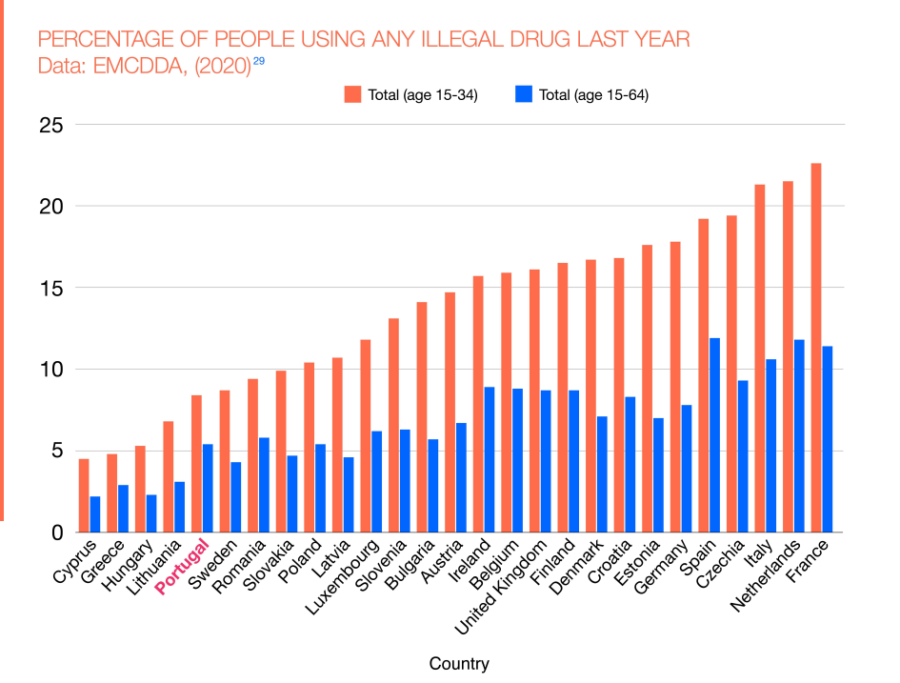
These attacks lack any nuance, equating decriminalisation with regulation and straw-manning evidence-base policies. The notion that the use of more heavily stigmatised drugs such as heroin and crack cocaine will rise following decriminalisation is baseless. To cite a well-documented case-study: analysis of Portugal’s decriminalisation model implemented in 2001 has resulted in drug use consistently remaining below the European average – while also leading to reduced drug-related deaths, HIV diagnoses and drug-related offences. These advantages would be a boon for Britain’s public systems, which are struggling to reduce record-high drug deaths and overwhelmed legal services.
Legalisation does not also mean widespread availability. As stated on the Green Party Drug Policy page: “Drugs that pose the highest risks will be subject to the heaviest regulation; less risky drugs will be subject to lighter regulation.” To achieve this, they outline the introduction of specific access mechanisms such as “medical prescriptions” (a system that previously existed in the UK before being defunded), “specialist pharmacy” and “licensed sales”, among others. Establishing a commercial heroin market is indeed not on the agenda, despite Starmer’s statements.
The core principle of the Green’s drug policy is dealing with drugs through a public health approach, rather than through the outdated prohibitionist and criminal justice approaches dealt by the current model in Britain. “Crack dens in playgrounds” is a world away from the Greens’ suggestion of funded supervised consumption facilities like The Thistle in Glasgow and better drug treatment and support services.
Labour and drug policy reform
Labour’s current positioning on drug policy is not new. Tony Blair’s New Labour government memorably cemented the Party’s enduring “tough on crime, tough on the causes of crime” approach. Legal drug regulation has never been seriously considered by the Party.
Since Starmer became leader of the Labour Party in 2020, drug policy reform has remained largely absent from Labour’s agenda. He’s publicly condemned cannabis use, while explicitly saying in 2022: “I’m not in favour of us changing the law or decriminalisation. I’m very clear about that.”
Speaking to Michael Wakelyn-Green, Communications Officer for the Green Drug Policy Working Group (GDPWG), he highlighted Labour Member of Parliament (MP) Steve Reed’s controversial 2022 proposal to create a register of people who use drugs to “name and shame” them as evidence of Labour’s hardline approach.
Given this context, Labour’s decision to attack the Green Party’s suggested drug policy reforms during the by-election came as little surprise to some observers. Steve Rolles, Senior Policy Analyst at Transform Drug Policy Foundation, argued that Labour’s approach reflected political desperation.
“Labour look desperate and have nothing to offer on drug policy,” Rolles told TalkingDrugs. “The attacks were arguably not even about drug policy, but more a ploy to smear the Green Party,” particularly as polling suggested Labour could lose a safe seat.
Wakelyn-Green echoed this view: “Labour were punished for thinking that attacking the Green’s drug policy with dishonest and emotive messaging would hinder their campaign. I think people ultimately saw through Labour’s farcical messaging.”
What this means for British drug policy
The Green’s victory in Gorton and Denton — despite sustained attacks on their drug policy — may signal a shift in the Overton Window surrounding the drug policy debate in the UK.
Rolles believes the by-election could represent a milestone in bringing drug policy into the political mainstream.
“We are past the high tide of War on Drugs posturing in British politics,” he said. “This is the first time drug policy debate has reached the mainstream with a clear reform policy behind it.”
Rolles also credited Polanski’s communication style and his ability to clearly present evidence about the failures of current drug policy. “Polanski often referenced human stories told by Transform’s Anyone’s Child campaign, to ground his arguments in human stories rather than dry statistics alone”.
Within the Green Party, Carrie Hamilton, co-coordinator of the GDPWG, told TalkingDrugs that the increased attention has been welcomed.
“Drug policy debate is getting the seriousness it deserves at a time when the issue is underrepresented in mainstream media, and the UK leads Europe in drug-related deaths,” Hamilton remarked. In 2024, 5,565 drug-related deaths were reported in England and Wales alone – a number that has doubled since 2012.
Wakelyn-Green went further, suggesting that the by-election has acted as a “gateway for the public to engage with drug policy”, prompting many to explore Green Party proposals in greater detail.
A visible sign of this growing engagement is the sharp increase in followers on the Green’s drug policy Instagram page, which now exceeds 5,000 — about 90% more followers since before the Gorton and Denton election.
Looking ahead
Challenges remain for the Greens and advocates of evidence-based drug policy reform. Sensationalist headlines from a morally outraged media class and political backlash from defenders of the status quo are likely to continue. Social media and the continual risk of misinformation will also shape how the debate unfolds.
Despite this, there is optimism within the GDPWG. Hamilton emphasised the importance of “controlling the narrative” moving forward.
“Evidence-based education will be crucial when communicating nuanced drug policy,” she said, alongside incorporating lived experience and ensuring canvassers are well equipped with accurate information.
Labour, meanwhile, shows little sign of shifting its position — despite criticism of its campaign strategy and growing internal unease. Rolles believes reconsideration would be logical.
“Starmer is going against his own drug policy advisory boards, polling data showing public support for at least cannabis decriminalisation, and evidence that reforms across Europe are producing positive results.”
Even within the UK, the drug policy landscape is changing. The Loop has recently opened a new drug-checking service in London alongside its existing Bristol side, funded by local councils and supported by the Metropolitan Police and drug treatment services.
Both Wakelyn-Green and Rolles argue that the by-election demonstrates that evidence-based drug policy can be a genuine “political asset”. Rolles predicts the issue could return to the headlines during local elections in May.
Hamilton also suggested the Greens will be “better prepared for future attacks”, pointing to the work of Zoë Garbett, Green mayoral candidate for the upcoming Hackney elections, who has been vocal in responding to Labour’s drug messaging.
In the aftermath of this historic by-election, advocates of progressive drug reform may cautiously hope that the British framing of drug-related discussions is beginning to shift.