Over the past 18 months, Washington, D.C. has escalated its law enforcement crackdown on unlicensed cannabis shops and the illegal commercialisation of psychedelics. Since the Medical Cannabis Conditional License and Unlicensed Establishment Closure Clarification Emergency Amendment Act of 2024 took effect on 15 July, 2024, the D.C. Alcoholic Beverage and Cannabis Administration (ABCA) and the Metropolitan Police Department have raided and shuttered 113 storefronts during this period.
The D.C. Council’s emergency legislation allows regulators to shutter unlicensed shops through rapid civil enforcement rather than relying on lengthy criminal investigations. District officials argue the enforcement protects consumers and supports licensed medical operators. The aggressive shift follows a transition period that gave unlicensed cannabis stores until 31 March 2024 to comply with medical market regulations – a lengthy process that required extensive documentation, zoning compliance, and significant capital investment.
Few companies succeeded in making the transition. As little as 10% of unlicensed D.C. cannabis shops transitioned to the legal medical framework. Over 35 unlicensed stores that failed to meet the legal opening deadline were denied a transition, shut down, and prosecuted by regulators and police.
The origins of this crackdown trace back to the unique legal limbo created by Initiative 71. Passed by District voters in 2014, the measure decriminalised the possession of up to two ounces of cannabis and allowed individuals to gift up to one ounce (28g) to another adult. However, congressional interference, specifically a federal budget amendment known as the Harris Rider, blocked the District from using local tax dollars to establish a regulated recreational sales framework.
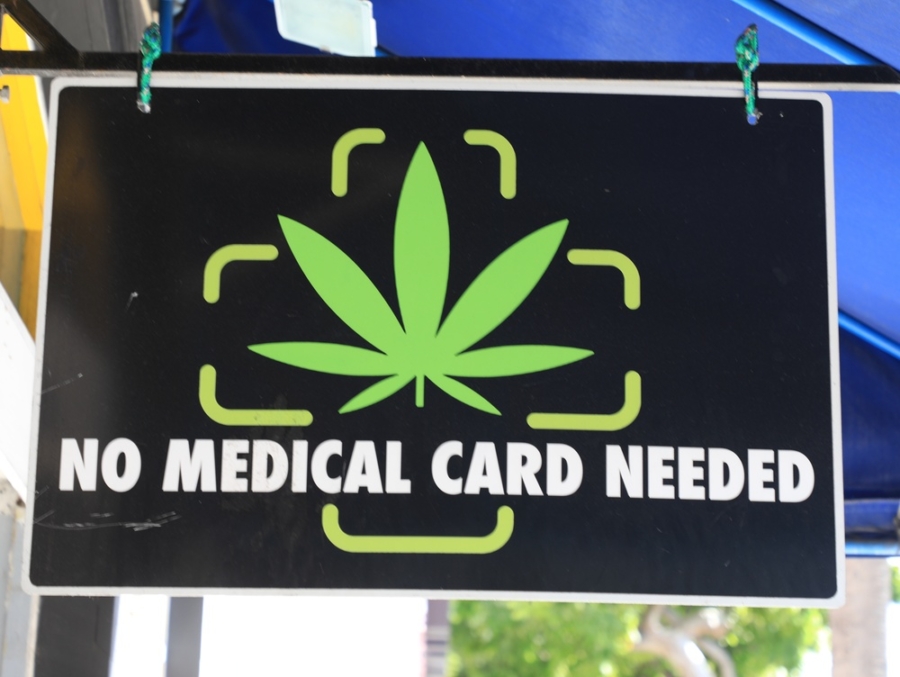
In the absence of licensed recreational dispensaries, a sprawling gray market emerged. Hundreds of storefronts opened across the city, ostensibly selling digital art, motivational speeches, or cheap apparel, while providing a corresponding gift of cannabis to the customer.
For a decade, these gifting shops operated in plain sight, transforming commercial corridors and building a robust, albeit unlicensed, local industry. The Medical Cannabis Amendment Act of 2022 marked the end of this model: it removed an old cap on the number of medical dispensaries that could be open in D.C. while also encouraging grey market operators to apply for formal licensing.
When the transition window proved too burdensome for the vast majority of shop owners, the city pivoted to the aggressive closure strategy now being carried out across the District.
Robert Rush, an attorney and founder of the Rights and Reason Project, argues the municipal approach in Washington, D.C., ignores basic market dynamics and punishes consumers.
“People patronise the unlicensed cannabis shops for a reason: they offer the prices, products, locations, and convenience consumers want,” Rush stated. “Closing these shops does not get rid of that demand. It simply redirects consumers either into an unsatisfactory licensed market or back into an underground market that will.”
Rush added that excessive bureaucracy, limited licensing, and unnecessary operating restrictions raise prices and reduce access, making legal businesses less competitive. He argued that cannabis regulation should protect public health without creating artificial scarcity for the benefit of a small number of license holders.
“Beer can be sold at the corner stores without the sky failing,” Rush noted. “There is no compelling reason for cannabis to be sold at a small number of heavily regulated dispensaries. Limited regulation, not regulatory protectionism, is a better course of action.”
D.C.’s cannabis enforcement has also uncovered several illegal psilocybin operations that were also operating in semi-legal ways. These businesses first came to existence after Initiative 81 in 2020, a ballot initiative that made the non-commercial use and personal gifting of naturally occurring psychedelics the lowest law enforcement priority. Crucially, the measure did not authorise commercial sales.
Raids on illegal cannabis shops are also turning up large amounts of psilocybin products. One operation shuttering Green Magic, a cannabis store in D.C., seized around seven kilos of cannabis and nearly 900 grams of psilocybin products, including 864 grams of mushroom edibles and 22 grams of raw mushrooms.
The ABCA is also successfully defending these closures in administrative hearings. The agency permanently closed GTDC Church, Inc., a D.C.-based Temple of Golden Teacher “Psychedelic Church” due to their explicit psilocybin sales. At the time, undercover Metropolitan Police Department investigators purchased 3.5 grams of psilocybin mushrooms for 40 dollars on June 24, 2025, and another 3.5 grams for 35 dollars on 17 July 2025.
According to the official ruling upholding the permanent closure of the operation, following a second purchase by undercover officers, police executed a search warrant and seized more than 5,800 grams of psilocybin products, alongside a cash register, product displays, and marketing materials promoting microdosing as brain fuel.
During the administrative appeal, the Temple of Golden Teacher tried to argue its psilocybin distribution was protected under the federal Religious Freedom Restoration Act – a claim rejected by the ABCA. Not only were they found to be commercialising psilocybin products (contravening Initiative 81’s quasi-decriminalisation protections), the Board determined the church did not have credible evidence of sincerely held religious beliefs, also noting that the Religious Freedom Restoration Act does not shield groups distributing Schedule I substances without a formal exemption from the Drug Enforcement Administration. The Board ruled the operation functioned as a commercial retail business, posing an imminent danger to the public.
Even in the wake of the crackdowns, former legacy market operators in the district have faced difficulties transitioning into the city’s licensed medical cannabis industry. Just last month, the D.C. Alcoholic Beverage and Cannabis Board recently formally denied an application to open a proposed medical cannabis dispensary called Aloha, citing a repeated history of regulatory violations and illegal unlicensed sales by the prospective owner of the now-rejected venture.
After reviewing the application, the Board concluded Aloha’s founder Saleh Salim lacked the requisite character and fitness for the license, pointing to three previous enforcement actions that shut down his earlier ventures for peddling unapproved, improperly labeled cannabis.
Most recently, on July 22, the Council unanimously passed another emergency legislation drastically expanding the Alcoholic Beverage and Cannabis Administration’s (ABCA) enforcement powers against illicit marijuana operators. Currently awaiting Mayor Muriel Bowser’s signature, the bill authorises the ABCA to summarily padlock businesses and seize products without a prior hearing if an establishment is deemed an imminent threat to public health.
While the measure provides regulatory relief for compliant operators by extending conditional licenses up to three years, its heavy focus on enforcement underscores the District’s aggressive, broader crackdown on the unregulated market—providing vital context for the Board’s strict scrutiny of applicants with a history of illegal sales.
From local crackdowns to multi-state trend
The enforcement campaign by the ABCA is concerning drug policy reform advocates in other jurisdictions, including Colorado, where community advocates worry that states favouring tightly regulated medical or therapeutic frameworks for cannabis or psychedelics will mean harsh crackdowns on independent practitioners and informal or underground networks.
In June 2026, Colorado enacted House Bill 26-1325, which creates a state-regulated ibogaine research pilot program within the Behavioural Health Administration to study the safety and effectiveness of using ibogaine to treat mental health conditions and substance use disorders. The program authorises the state to select up to five pilot sites to administer the compound under strict medical supervision.
While the Bill has a commendable clause to force those licensed to cultivate, manufacture, dispense, or administer ibogaine must establish benefit-sharing schemes with Indigenous communities, it also introduces new strict controls on the wider natural medicine landscape.
It explicitly prohibits individuals from advertising bona fide harm reduction or support services offered for remuneration, it bans the advertisement of natural medicine products, and prohibits using harm reduction or support services as a front to conduct sales of natural medicine. The law restricts the personal sharing protections originally established by the 2022 Natural Medicine Health Act, narrowing the legal space for practitioners operating outside of state-licensed frameworks.
Jacob Marlega, a Colorado mushroom cultivator and co-founder of the Voted to Share Campaign, is organising to repeal the new restrictions. On 9 June 2026, state officials approved Marlega’s referendum petition for circulation, giving his group until 11 August 2026 to gather enough signatures to challenge the rollbacks on personal sharing. Marlega argues the regulatory tightening will criminalise informal care networks.
“We fear the arrests happening in DC with cannabis could happen with psilocybin in Colorado,” Marlega said. “No person should be gate-kept from natural medicines.”
Washington D.C.’s crackdown on grey market stores and Colorado’s new ibogaine pilot programme could be evidence of state and municipal governments drawing new hard lines between authorised access programmes for naturally occurring plants and underground networks. Both jurisdictions are building narrow, state-controlled pathways for access while explicitly dismantling the gray markets and informal networks that operate outside their regulatory reach.
As the list of shutdowns grows longer, the criminal charges pile up for semi-underground operators in D.C, and the gray market gets driven further back underground, business for the District’s licensed medical cannabis industry has never been better: the ABDCA reported a record high of $10.3 million in sales throughout June 2026.
This article was produced in partnership with Psychedelic State(s) of America – a nonprofit-sponsored news organization dedicated to rigorous independent psychedelic journalism. Learn more about PSA’s Media Partnerships Program and donate to the PSA Media Fund here.