By any traditional metric, Belgium and the Netherlands are among the most stable, prosperous, and administratively efficient societies in the world. Yet beneath this façade of order lies a rapidly evolving criminal ecosystem – one that has transformed the ports of Antwerp and Rotterdam into critical arteries of the global cocaine trade.
Over the past decade, these countries have emerged as Europe’s primary entry points for South American cocaine, reshaping not only criminal networks but also the social and political fabric of the region.
The scale is staggering. Antwerp, now widely considered the cocaine capital of Europe, routinely seizes record-breaking quantities of narcotics. Seizures peaked in 2023, when authorities seized a staggering 116 tonnes, up from 40 tonnes in 2017. Recent years, however, have seen these figures drop as police operations ramp up.
Rotterdam, a logistical marvel as Europe’s largest port, is equally attractive to legitimate businesses as it is to drug traffickers. Together, these ports process millions of containers annually, making detailed inspections of shipments impossible. Criminal organisations exploit this sheer volume, embedding shipments within legitimate trade flows. Cocaine concealed in fruit shipments, frozen fish, or industrial goods enters Europe with remarkable efficiency.
What has changed in recent years is not merely the volume of drugs, but the structure of the networks behind them. The old hierarchies of centralised cartels with clear chains of command have given way to decentralised, fluid alliances. Balkan syndicates, Dutch-Moroccan groups, South American producers, and local European intermediaries collaborate in flexible arrangements, bound more by profit than loyalty.
In early 2019, Dutch police were surprised to arrest Mexican sicarios that were sent by Mexican cartels to help Dutch criminal elements deal with enemies as well as cook meth. Since then, the Dutch authorities have dismantled dozens of labs producing synthetic drugs, including 32 meth labs in 2020 alone.This fragmentation makes law enforcement efforts exponentially more difficult; dismantling one cell rarely disrupts the broader system.

In the Netherlands, the consequences have become impossible to ignore. The country’s long-standing reputation for drug tolerance and pragmatism has collided with the brutal realities of the cocaine trade. Assassinations linked to organized crime, once rare, now occur with alarming regularity. Journalists, lawyers, and even witnesses in major trials have been targeted. The murder of crime reporter Peter R. de Vries in 2021 marked a turning point, signaling that the violence traditionally associated with Latin American drug markets is increasingly appearing in Europe.
Belgium faces a similar trajectory. In Antwerp, entire neighborhoods have become entangled in the drug economy. Children and young men, often from marginalised communities, are recruited as “extractors” tasked with retrieving cocaine shipments from port terminals before authorities can intercept them. The work is dangerous but lucrative, offering a sense of purpose and income in environments where opportunities are limited. For many, the risk is worth the reward.
Authorities have responded with increasingly aggressive measures. Police units specialising in port security have expanded, employing advanced surveillance technologies and data analysis tools. International cooperation has intensified, with European agencies working alongside counterparts in Latin America to track shipments and dismantle networks at their source.
Yet for every shipment seized, many more slip through undetected. The economics of the trade remain overwhelmingly in favor of traffickers: a single successful shipment can offset multiple losses. Law enforcement authorities and government bodies are always playing catch up against the many criminal elements involved in the drug trade: their creativity combined with their insatiable drive to make money has kept them ahead of the game.
Corruption represents another critical vulnerability. The infiltration of port operations through bribery, coercion, or both has enabled traffickers to bypass security protocols. Dockworkers, customs officials, and logistics personnel have all been implicated in facilitating the movement of drugs. In some cases, entire teams within port facilities have been compromised, creating systemic weaknesses that are difficult to eradicate.
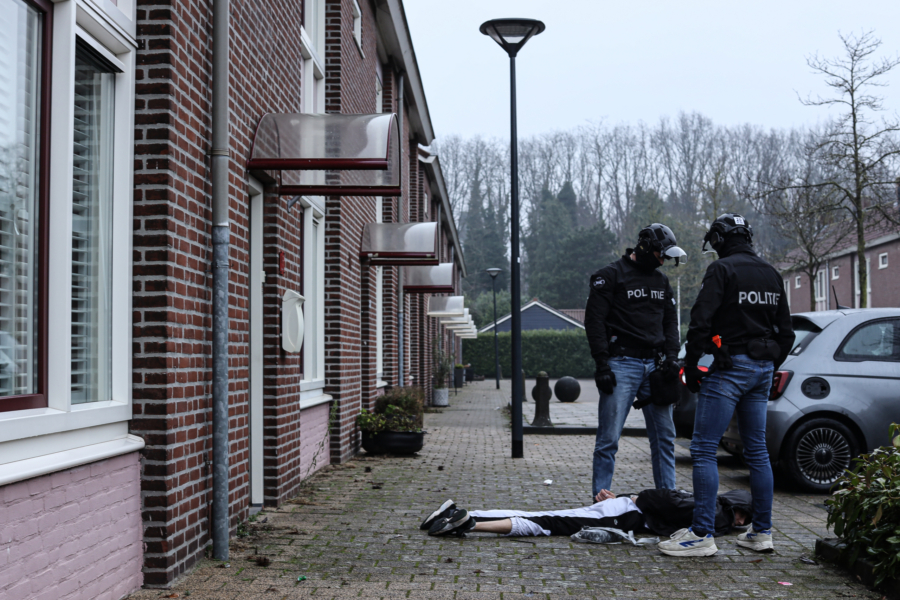
The violence accompanying this trade is not merely a byproduct; it is a mechanism of control. Explosions targeting homes and businesses, often using improvised devices, have become a common tactic in Dutch cities. In February 2025, I witnessed a special police unit arrest a young Ethiopian who had been adopted by a local Dutch family. After weeks of investigation, it was discovered that he had been hired by a local criminal gang to plant gas cylinders on the door step of competitors.These attacks serve as warnings, enforcing discipline within criminal networks and intimidating rivals.
Yet the story is not solely one of crime and enforcement. It is also a reflection of global demand. Europe’s appetite for cocaine continues to grow, driven by affluent consumers who remain largely insulated from the consequences of their consumption. According the the most up to date data, around 4.5 million Europeans used cocaine in 2025, and cocaine residues in wastewater increased in 48 of the 85 cities tested compared to the previous year. with comparable data for 2024 and 2025.
In reality, the real extent of cocaine consumption, and production, is very hard to measure. It is estimated that only about 15% of cocaine intended for the EU market is actually caught. And as long as this demand persists, supply will find a way.

Photographing this world has revealed its contradictions to me in ways I could never have fully anticipated. I have witnessed the stark contrast between the sleek, orderly infrastructure of European ports and the clandestine activities unfolding within them. As I look through my lens, containers stacked in perfect symmetry often conceal stories of chaos and violence. In the urban neighbourhoods I have documented, the ordinary rhythms of daily life coexist with an undercurrent of tension, a constant awareness that the drug trade is never far away.
There have been moments that have captured this duality with unsettling clarity. I have stood on a quiet residential street in Rotterdam where an explosion had shattered windows only hours earlier. I have photographed a port terminal in Antwerp at dawn, bathed in golden light, while investigators searched container after container for hidden narcotics. I have observed young men lingering at the edges of industrial zones, waiting for instructions that could alter the course of their lives—or bring them to an abrupt end. These moments have shown me how closely the ordinary and the extraordinary, the visible and the hidden, coexist within this world.
These images challenge the narrative of distance that often surrounds the drug trade in Europe. This is not a distant problem confined to other continents; it is embedded within the infrastructure and societies of Europe itself. The ports of Belgium and the Netherlands are not just transit points; they are front lines.
The question moving forward is whether these countries can adapt quickly enough to counter a threat that is both global and deeply local. Efforts to enhance security, disrupt networks, and address corruption are essential, but they must be accompanied by broader strategies that tackle the root causes of involvement in the trade. Economic inequality, social exclusion, and the allure of easy money all play a role in sustaining the system.